Microsoft Build 2026 delivered sweeping enterprise IT announcements across hardware, cloud, and AI platforms. Here is what happened, and what your team should do about it.
Microsoft held its annual Build developer conference on June 2 and 3, 2026, at Fort Mason in San Francisco. The keynote, led by CEO Satya Nadella, covered the entire enterprise stack, from the chip in a developer's desktop to cloud data center hardware running in Iowa and Arizona. This was not just a developer event. The decisions Microsoft announced here will shape enterprise IT purchasing, infrastructure planning, and operations for the next several years.
Here is what happened, why it matters, and what your team should do about it.
The Surface RTX Spark Dev Box: Local Compute Gets Serious
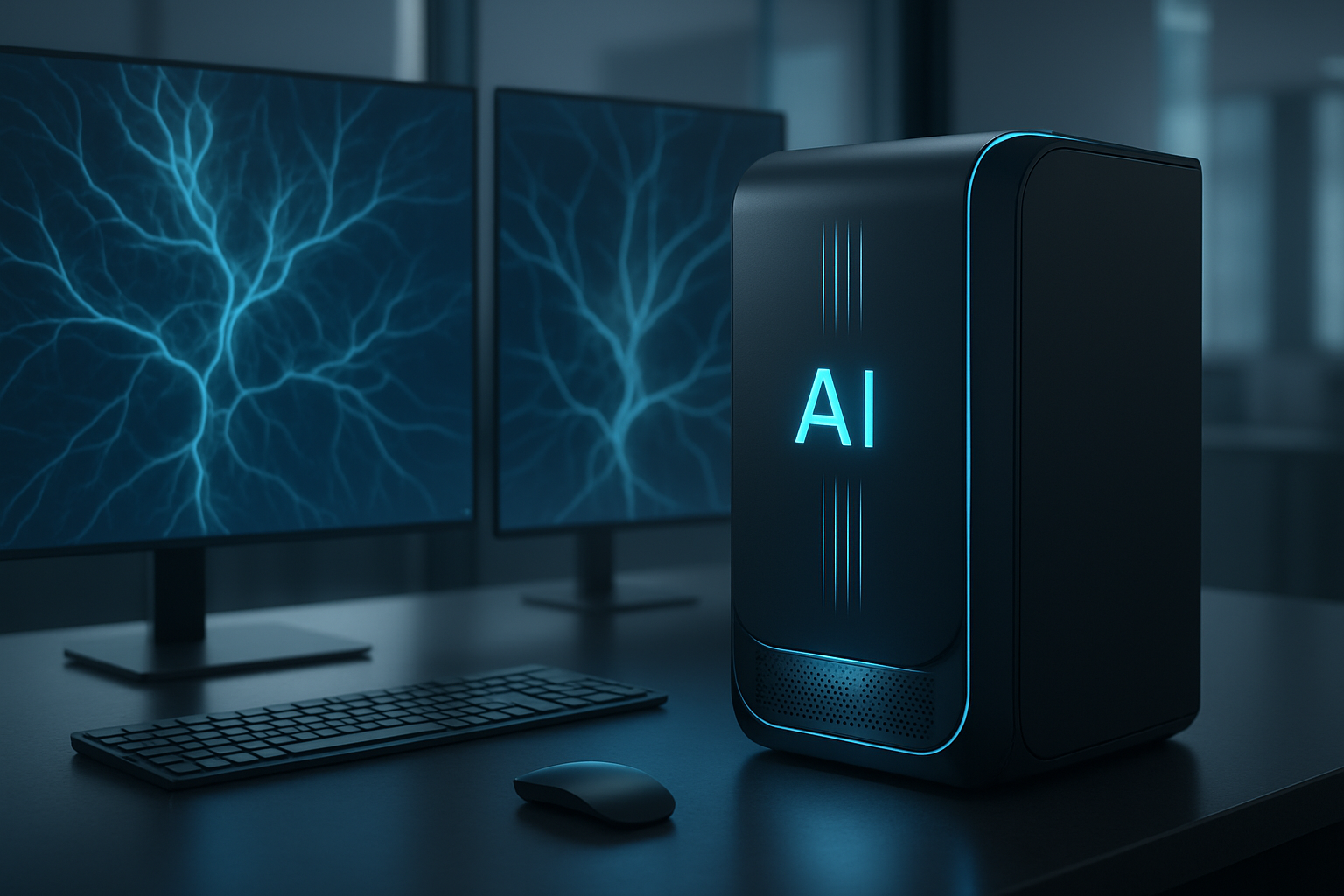
The biggest hardware announcement at Build was the Surface RTX Spark Dev Box, a compact desktop workstation built for AI developers. Powered by NVIDIA's RTX Spark platform, it delivers up to 1 petaflop of AI performance with 128 GB of unified memory, allowing developers to run models with more than 120 billion parameters locally. The architecture combines a 20-core NVIDIA Grace CPU with a Blackwell GPU featuring 6,144 CUDA cores, all on a unified memory bus.
For enterprise IT, the implication is straightforward. Teams spending heavily on cloud API calls for development and testing cycles have a concrete local alternative. Recurring token costs drop, and iteration stays fast and predictable. The Surface RTX Spark Dev Box begins shipping to early adopters in August 2026.
Windows Foundry and the Aion On-Device Models
Windows Foundry is the platform that lets developers run AI models on laptops and PCs using the machine's NPU, GPU, or CPU, keeping data off external endpoints entirely. Microsoft paired it with two new on-device small language models: Aion 1.0 Instruct, a compact and fast SLM, and Aion 1.0 Plan, a reasoning and tool-calling model that enables fully local agentic capabilities. Both are arriving in the coming months.
Microsoft is also expanding Windows AI APIs across CPU and GPU on more Windows 11 PCs. Speech-to-text recognition is now available on NPUs and CPUs, and on-device SLM support is expanding to capable discrete GPUs. For businesses in regulated sectors, this combination opens a realistic path to running AI workflows without sending sensitive data to any external endpoint.
Project Solara: An Agent-First Platform Beyond Windows
Microsoft showed an early look at Project Solara, described as a chip-to-cloud platform designed for an open, multi-agent world spanning every layer of the stack. Two reference designs were shown: a badge-style wearable powered by Qualcomm silicon, and a desk companion powered by a MediaTek SoC. Neither is shipping yet.
Nadella and applied science group leader Steven Bathiche were clear on the intent: these devices "are not meant to run traditional apps. They are designed for agents." IT leaders should treat Solara primarily as a platform direction signal. The concept devices are reference designs for hardware partners, not products Microsoft will sell directly.
Azure Infrastructure: Maia 200, Cobalt 200, and a New Network Protocol
Microsoft's second-generation AI accelerator, Maia 200, is already running in data centers in Iowa and Arizona, with Italy, Australia, and South Korea coming next. Cobalt 200 VMs entered preview, and Microsoft introduced a new open network protocol called Multipath Reliable Connection (MRC), co-developed with AMD, Broadcom, Intel, OpenAI, and NVIDIA, designed to keep extreme-scale AI workloads moving reliably at scale.
On the data side, Microsoft Fabric Data Warehouse now runs eligible queries directly on NVIDIA accelerated computing inside the execution engine, with no infrastructure setup required. You enable hardware acceleration in workspace settings, and the query optimizer pushes work to the GPU when appropriate. The underlying research, called CoddSpeed, won Best Industry Paper at SIGMOD 2026. Internal benchmarking in May 2026 showed GPU-accelerated Fabric Data Warehouse running up to 7x faster than three other major cloud warehouses. Fabric is the first fully managed SaaS data warehouse to ship this capability.
GitHub Enterprise Local: Air-Gapped Deployments Get a Real Answer
Microsoft previewed GitHub Enterprise Local, designed to run on Azure Local infrastructure in either a connected or air-gapped environment. GitHub Actions run on self-hosted runners, and AI assistance remains available through an on-premises inference layer called Foundry Local.
This is a meaningful move. Until now, organizations needing true air-gap compliance had limited options that preserved modern developer tooling. GitHub Enterprise Local changes that directly.
Windows 365 for Agents: Managed Cloud PCs for Automated Workflows
Windows 365 for Agents is now generally available. It gives computer-using agents secure, managed Cloud PCs to execute enterprise workflows, assigning automated tasks to a policy-controlled environment rather than letting agents run across employee devices. For IT teams already managing Windows 365, this is an incremental provisioning exercise. For those who have not yet deployed it, the capability is worth evaluating as part of any automation roadmap.
Azure Linux 4.0 and Azure HorizonDB
Two quieter but operationally relevant announcements rounded out the week. Microsoft previewed Azure Linux 4.0, noting it "already powers millions of cores across Azure's internal services, including AKS, Azure SQL, Azure Cosmos DB, and many others," and confirmed it will be an option for any Azure VM.
On the database side, Azure HorizonDB introduces built-in AI features including advanced vector indexing, semantic search, in-database access to AI models, and integration with Microsoft Fabric and Microsoft Foundry. Developers keep building with PostgreSQL while gaining the scale and performance needed for AI-driven applications.
What IT Teams Should Do Right Now
Build 2026 was broad, but the practical to-do list is manageable:
- Evaluate the Surface RTX Spark Dev Box for AI development teams. If your developers are paying cloud API costs for iterative model testing, the economics of a local petaflop workstation may be compelling when it ships in August 2026.
- Assess Windows Foundry and Aion models for data-sensitive workflows. If compliance or legal restricts what data can leave the network, local inference is now a viable production option, not just a proof of concept.
- Pilot GitHub Enterprise Local if you operate in a regulated, air-gapped environment. It is the first option that combines modern CI/CD tooling with true network isolation and on-premises AI assistance.
- Review your Fabric Data Warehouse configuration. GPU acceleration is a workspace settings toggle. If your organization runs large reporting workloads on Fabric, the performance gain is worth testing now.
- Watch Project Solara for hardware procurement planning. No purchase decision is needed today, but knowing Microsoft's device roadmap will help you set endpoint policies before partner devices appear in enterprise catalogs.
The overall arc of Build 2026 is Microsoft systematically moving the enterprise IT estate, from edge devices to cloud data centers, onto a single agent-aware platform. Individual components are already shipping or in preview. The integration picture is still coming together, but the direction is clear.
How 247techify Can Help
At 247techify, we help businesses make sense of exactly these kinds of platform shifts, evaluating new Microsoft infrastructure, planning Windows 365 deployments, and aligning cloud and on-premises tooling with your compliance and operational requirements. If you want a clear-eyed assessment of what Build 2026 means for your specific IT environment, get in touch with our team today.