Meta and Reliance Industries announced a 168 MW AI-enabled data center in Jamnagar, Gujarat on June 9, 2026, signaling India's arrival as a tier-1 global compute market.
India just landed its most high-profile data center deal yet. On June 9, 2026, Meta Platforms and Reliance Industries jointly announced that Reliance will build and operate Meta's first AI-enabled data center in India: a 168-megawatt facility in Jamnagar, Gujarat. For IT leaders worldwide, this is not just a story about one company building one campus. It signals a concrete, accelerating shift in where global compute infrastructure is being planted, and why your own sourcing, vendor, and cloud geography decisions may need a rethink.
What Was Announced
Meta is making its first AI infrastructure bet in India, striking a data center partnership with conglomerate Reliance Industries in a market rapidly emerging as a hub for AI infrastructure. The two companies will collaborate on a 168 MW AI-enabled facility in Jamnagar, expanding a relationship that has evolved from Meta's multibillion-dollar investment in Reliance's Jio Platforms to a $100 million joint venture launched last year to develop enterprise AI solutions for customers in India and overseas markets.
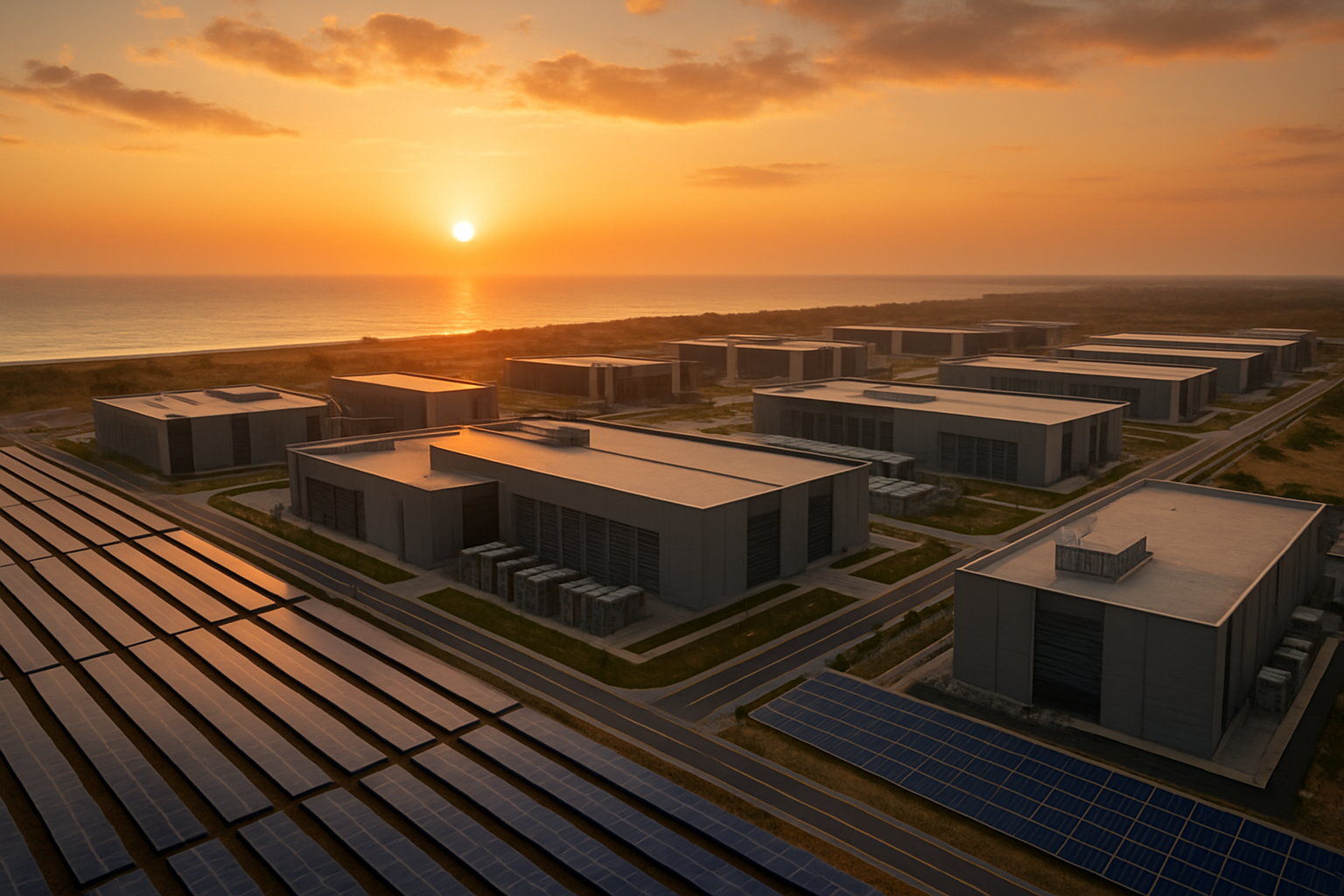
End-to-end responsibility for the facility falls to Reliance, covering construction, design, power sourcing, connectivity, and day-to-day operations. Cooling will rely on desalinated seawater, the campus will run on renewable power, and Meta will bear all associated energy and water costs.
Reliance said the facility will be ready within two years and can be expanded over time. It will also support Meta's global infrastructure and AI computing requirements, plugging India more directly into the company's worldwide network of AI facilities. Separately, Meta is partnering with clean energy providers CleanMax and Fourth Partner Energy to back nearly 1 GW of renewable energy in India.
Why This Deal Stands Out
Hyperscalers announce data center investments regularly. This one is different for three reasons.
It is a built-to-suit colocation deal, not a Meta-owned campus. Reliance provides end-to-end services from design and construction to renewable power, connectivity, and ongoing operations. That model, where a local giant builds and runs the shell while a US hyperscaler fills it, is becoming a blueprint others will follow.
The relationship has deep roots that reduce execution risk. The Meta-Reliance agreement is the latest chapter in a partnership that has steadily deepened since Meta invested $5.7 billion in Jio Platforms in 2020. The companies have since expanded collaboration across digital services, enterprise AI, and now the infrastructure underpinning next-generation AI systems.
This is happening on India's terms. The Indian government has announced a 20-year tax exemption for hyperscalers that use data centers in the country to service global clients. That policy lever is attracting capital at a pace that is reshaping the regional map of enterprise compute.
India Is Now a Tier-1 Data Center Market
Meta is not arriving alone. Uber, Amazon, OpenAI, Microsoft, and Google have all announced plans to build cloud and AI infrastructure in India.
The numbers behind the rush are striking. According to Cushman and Wakefield's Global Data Center Market Comparison 2026 report, India ranks as the second-largest market in Asia Pacific with 1.6 GW of operational capacity, and sits among the top three markets by development pipeline, with 3.1 GW under construction or planned. Global investment in India's AI ecosystem has reached $400 billion over the past year, the majority directed at facilities and energy infrastructure.
In a June 2 report, Nomura described India's data center industry as one of the fastest-growing globally, projecting capacity will rise to 7 GW by 2030, driven by cost efficiency relative to other developed Asia Pacific and Western markets.
For context on Meta's own spending direction: the company has raised its projected capital expenditure for the full year to between $125 billion and $145 billion, with CFO Susan Li citing anticipated rises in component costs and additional data center spending as key drivers.
What IT Teams and Business Leaders Should Take Away
India is a live sourcing option, not a future one. If your organisation has operations, customers, or data touching South Asia, the argument for running workloads closer to that user base just became much stronger. Within two years, Meta will have 168 MW of capacity in Gujarat, and the surrounding partner and connectivity ecosystem will grow to match.
The built-to-suit colocation model is gaining ground. Meta is not building this campus itself. Reliance designs, builds, powers, and runs it, transferring construction and operations risk to a party with local regulatory knowledge and energy relationships. IT procurement teams evaluating colocation versus owned infrastructure should watch this model closely.
Renewable energy and water sourcing are now infrastructure requirements, not optional extras. The facility's use of renewable power and desalinated seawater cooling is not a PR decision. In markets where grid reliability is mixed and water scarcity is real, that design reflects operational necessity. Enterprises planning to build or procure capacity in similar geographies need to build these criteria into their RFPs from day one.
Geography diversification is accelerating. The global enterprise IT infrastructure map is being redrawn in real time. Tech giants are seeking new geographies for data centers amid soaring demand for compute to train and deploy AI models. IT leaders relying on a single region or a single hyperscaler's footprint should be reviewing their resilience posture now, not after a capacity crunch or a latency problem surfaces.
Connectivity matters as much as the building. Meta has noted that the Jamnagar facility ties into its broader network investments, including Project Waterworth, described as the world's longest subsea cable system. When evaluating data center locations, the fibre and subsea cable topology feeding the campus is as important as power draw and cooling design.
How 247techify Can Help
At 247techify, we help businesses navigate exactly these kinds of infrastructure shifts, whether you are assessing cloud geography strategy, evaluating colocation partners, or planning a move to hybrid or multi-cloud environments. Our team keeps close watch on where global capacity is being built and what it means for your IT operations and costs. If the India data center boom, or any other infrastructure trend, is on your planning agenda, get in touch at https://www.247techify.com/ and let's work through it together.