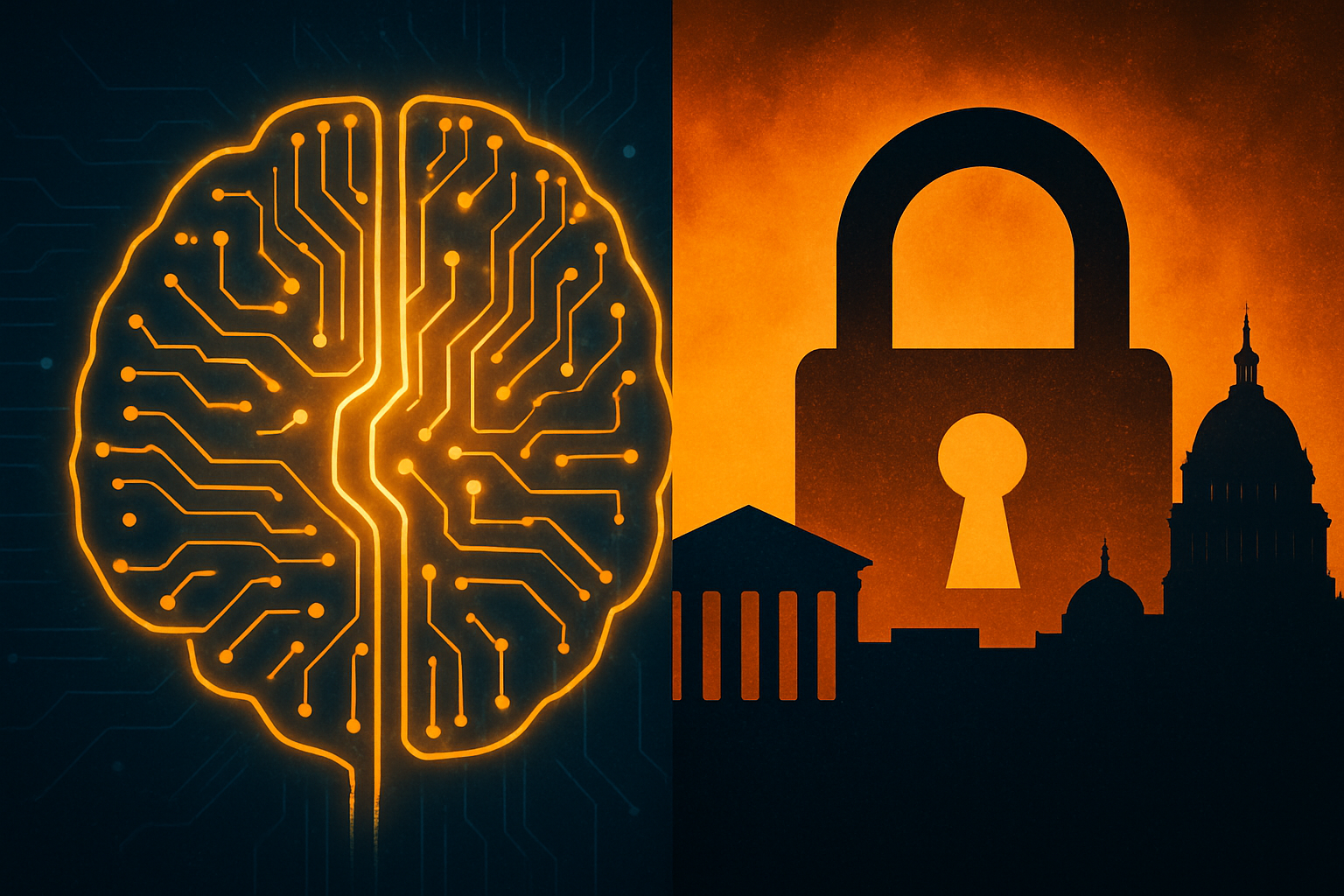
Washington blocked global access to Anthropic's most powerful AI vulnerability-hunting models days after launch. Here is what happened and what business leaders must do now.
The most powerful AI vulnerability-hunting models ever released are now off-limits to anyone outside the United States, after Washington intervened days after launch. Here is what happened, why it matters, and what business and IT leaders should watch next.
What Just Happened
On Tuesday, Anthropic released two new models: Fable 5 to the general public, and Mythos 5 to a smaller group of cyber defenders and infrastructure providers. The launch was short-lived.
Within days, Anthropic disabled access to both models to comply with a government-issued export control directive citing national security concerns. The company said it received an order to suspend access "by any foreign national, whether inside or outside the United States, including foreign national Anthropic employees."
On June 15, Anthropic executives met with the US Department of Commerce in Washington DC. CEO Dario Amodei was expected at that meeting with Secretary Howard Lutnick. After high-level talks, both sides remain split on the risk Fable 5 presents and are working to resolve things quickly.
What Makes Mythos 5 Different from Anything Before It
To understand why the US government moved fast, you need to know what Claude Mythos actually does.
Claude Mythos is a large language model built to find software vulnerabilities. It has attracted attention for identifying flaws that are unknown even to the service providers themselves. Anthropic has said the preview "has already found thousands of high-severity vulnerabilities."
Fable 5 is a version of the tool with extra safeguards made available to the public. Mythos 5 has different controls and is only available to a select group of organisations. Anthropic chose not to release Mythos 5 more widely over concerns it could be used for hacking.
This is the core tension: the same model that finds a zero-day vulnerability for a defender can hand a roadmap to an attacker. The US government is trying to balance its hardline approach with the national security implications of leaving Mythos ungoverned.
The Bigger Context: From Japan's Banks to a Global Dispute
Anthropic had spent months carefully expanding Mythos access to vetted organisations before the block hit.
- Anthropic granted access to roughly 150 companies and organisations across more than 15 countries.
- The Japanese government and major financial institutions secured access, with Finance Minister Satsuki Katayama describing it as significantly shoring up cybersecurity weaknesses.
- Three Japanese megabanks are reportedly included: MUFG Bank, Mizuho Bank, and Sumitomo Mitsui Banking.
- Other partners in the NEC-Anthropic project include Sumitomo Life Insurance, Daiwa Securities Group, Sumitomo Mitsui Trust Group, and Meiji Yasuda Life Insurance.
All of that international expansion is now on hold. The US government order requires Anthropic to block access for any foreign nationals, whether inside or outside the US.
The Anthropic-Washington Relationship Is Complicated
This clash is not simply about one model release.
Until recently, Claude was the only AI model available in the Pentagon's classified network. But President Trump announced the administration would sever ties with Anthropic after the company refused to allow the military to use Claude for "all lawful purposes," including autonomous weapons and mass surveillance. The Pentagon declared Anthropic a "supply chain risk," a label historically reserved for companies linked to foreign adversaries.
Trump directed all federal agencies to stop using Anthropic, calling it a "radical left, woke company." Yet the same administration is now pressing Anthropic to restrict Fable 5 and Mythos 5 globally, recognising those models are too powerful to leave unchecked. It is a contradiction that tells you everything about where frontier AI sits in 2026: too important to ignore, too powerful to leave ungoverned.
What This Means for Business and IT Leaders
1. AI export controls are real and moving fast. If your organisation is outside the US and was counting on access to frontier AI tools, especially those with security or vulnerability-scanning capabilities, you need a contingency plan. In response to European banks being denied Mythos access, Mistral AI has begun developing its own model. Sovereign AI alternatives are coming, but they are not here yet.
2. The dual-use problem is now impossible to ignore. The same AI capability that finds vulnerabilities in your systems can find them in your competitors' systems or in critical infrastructure. Every organisation deploying AI for security work needs to think carefully about access controls, audit trails, and what happens if a model update changes the risk profile overnight.
3. Restricted-access AI is becoming a competitive advantage. JPMorgan was the only bank included in the initial partner group under Anthropic's Project Glasswing. Organisations with early access to tools like Mythos 5 can find and fix vulnerabilities that others cannot see at all. Being in those partner programmes matters.
4. Compliance teams need to be in the AI conversation now. Export control orders that restrict who can use a software product, down to an individual employee's nationality, are a new kind of compliance risk. Legal, HR, and IT need to be coordinating on this, not working in silos.
5. Watch the Washington-Anthropic talks closely. The outcome of the Amodei-Lutnick negotiations will set a precedent for how the US government handles future frontier model releases. Whatever framework emerges will likely shape AI procurement policy across allied nations.
The Bigger Picture
Claude Fable 5 and Mythos 5 are the clearest signal yet that frontier AI has crossed into territory where it is treated like defence technology, not consumer software. Governments are not waiting for incidents before they act. Business leaders who treat AI purely as a productivity tool, without a governance lens, are already behind the curve.
How 247techify Can Help
At 247techify, we help businesses evaluate, deploy, and govern AI tools responsibly, whether that means assessing model risk, building access control policies, or staying current as regulations shift. If you are navigating AI strategy in a fast-moving regulatory landscape, we would be glad to talk. Reach out to us at https://www.247techify.com/.